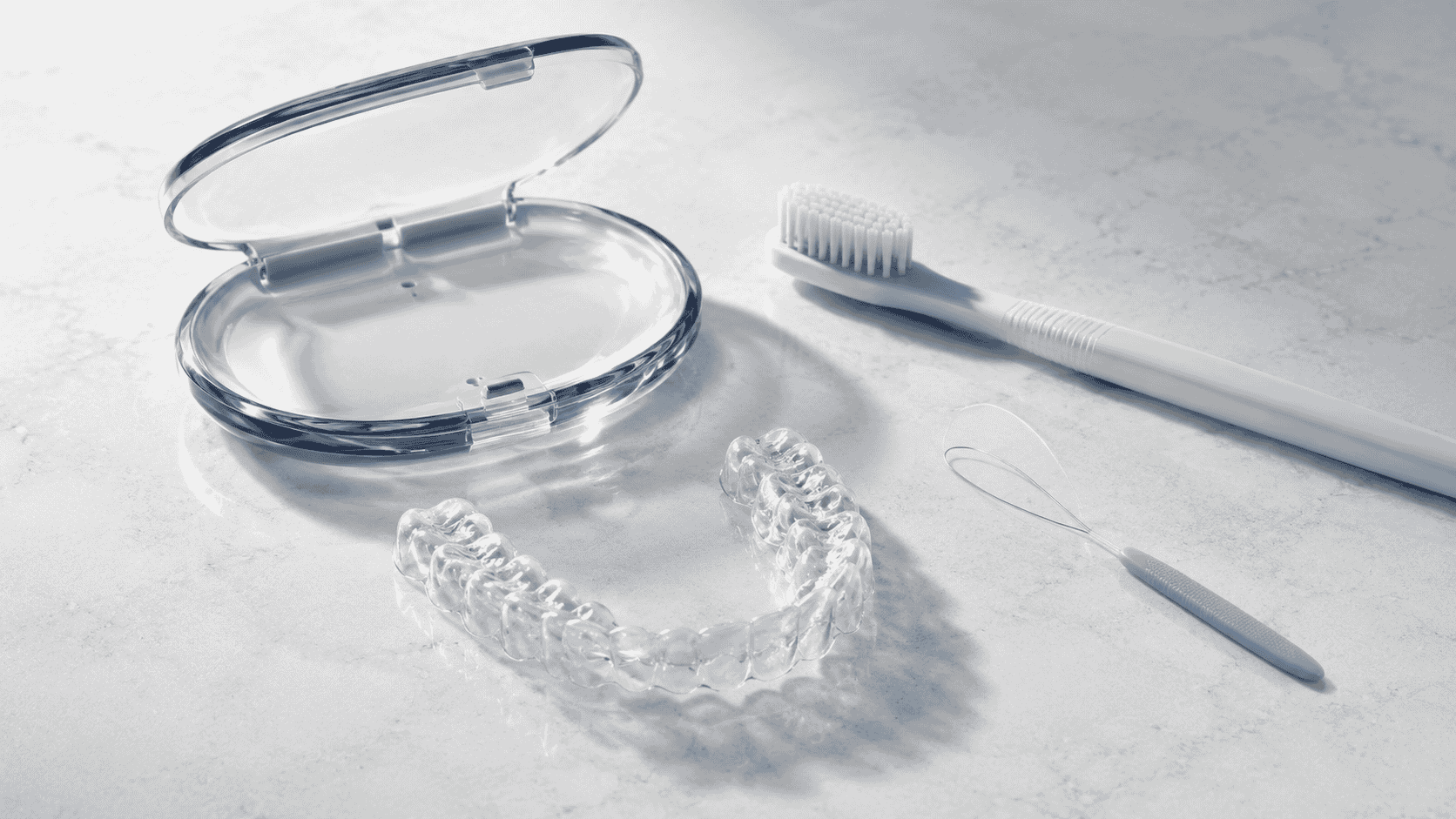

Clear aligners are an effective orthodontic option for teens, but success depends on consistent wear for 20–22 hours per day. Research shows around 50% of adolescents with removable appliances fall short of this target, making parental involvement and accountability systems essential for achieving the best results.
Choosing orthodontic treatment for your teen involves more than picking a method—it requires planning for follow-through. Clear aligners have become a popular choice for teenagers here in Longview because they’re nearly invisible, comfortable, and removable. But that removability is a double-edged sword. Unlike traditional braces, which stay in place no matter what, clear aligners only work when your teen actually wears them.
If you’re navigating this decision for the first time, understanding what drives compliance (and what gets in the way) will put your family in a much stronger position before treatment even begins.
Key Takeaways:
- Clear aligners offer real advantages for teens, including discretion, comfort, and fewer dietary restrictions
- Compliance is the single biggest factor in whether clear aligner treatment succeeds
- Parental involvement, especially in the early stages, significantly improves outcomes
- Simple daily habits and accountability systems make a measurable difference
- Treatment typically runs 12–18 months when teens wear their aligners consistently
- Wagner Orthodontics in Longview can help you make the right choice

Why Teens Choose Clear Aligners Over Traditional Braces
For most teenagers, appearance matters—a lot. Clear aligners address this directly. The trays are virtually invisible, so teens can go through school, sports, and social events without the self-consciousness that often comes with metal brackets and wires. That confidence factor alone is enough for many families to lean toward aligners over traditional braces.
Beyond aesthetics, clear aligners fit more naturally into an active lifestyle. Teens can remove them for contact sports, school photos, or special events. There are no brackets to break, no wires to irritate the inside of the mouth, and no long list of foods to avoid. Brushing and flossing stay easy, which also means better oral hygiene throughout treatment. For teens who play instruments, particularly wind instruments, aligners are often far more comfortable than metal braces.
The Accountability Challenge: Making Sure Your Teen Actually Wears Them
Here’s where things get real. Clear aligners work exceptionally well—when worn. Research shows that good compliance leads to success rates of 75–90% in clear aligner therapy. The problem is that roughly 50% of adolescents with removable orthodontic appliances fail to meet the recommended wear time of 20–22 hours per day (according to a review published in PMC, NCBI, 2025).
The most common reasons teens fall short are forgetfulness (34.5%), discomfort when switching to a new tray (24.1%), and social concerns (13.8%). None of these are unusual, but left unaddressed, they can quietly extend treatment timelines or compromise results.
Practical tracking methods make a real difference here. Setting twice-daily phone reminders (one in the morning, one at night) is a low-effort way to reinforce the habit. Some families use a simple habit-tracking app like Habitica or Streaks to help teens log their wear time and build consistency. Visual progress tracking, such as checking off each completed aligner set on a printed chart, also gives teens a tangible sense of momentum.
Setting Clear Expectations Before Treatment Starts
One of the most important conversations you can have happens before your teen’s first aligner arrives. Talking through what the commitment actually looks like, and agreeing on expectations together, sets a very different tone than trying to course-correct later.
A simple responsibility agreement works well for many families. This doesn’t need to be formal—just a shared understanding of the rules. Aligners come out only to eat, drink (anything besides water), brush, and floss. They go back in immediately after. If an aligner is lost, the teen takes ownership of communicating that to our office right away.
Pairing expectations with a reward system can also help. Acknowledge milestones—completing the first set of trays, reaching the halfway point, finishing treatment on schedule. Rewards don’t need to be extravagant. Often, the acknowledgment itself is what keeps a teen motivated. The goal is to make compliance feel like something worth caring about, not something being policed.
Daily Habits That Set Teens Up for Success
Consistency is easier to maintain when aligner care becomes part of an existing routine rather than an extra task. Morning and evening routines are natural anchors.
A simple daily checklist might look like this:
Morning:
- Rinse aligners before putting them in
- Brush teeth after breakfast, then reinsert aligners
- Pack the aligner case in your backpack (never wrap aligners in a napkin at lunch)
Evening:
- Remove aligners, brush and floss thoroughly
- Clean aligners with a soft toothbrush and lukewarm water
- Store them in the case overnight only if you’re wearing a different set the following morning
The most common source of lost aligners? Napkins at the school cafeteria. Drilling this one habit into your teen early can prevent a lot of headaches. A brightly colored case helps too—it’s much harder to accidentally throw away something you can actually see.
For teens in sports, a designated spot in their gear bag for the aligner case keeps things consistent. We always recommend letting coaches and school staff know your teen wears aligners, so there’s no pressure to leave them out during practices or lunch.
Monitoring Progress and Staying Motivated
Regular check-ins at our office are built into your teen’s treatment plan, typically every few weeks depending on where they are in the process. These appointments give Dr. Wagner the opportunity to assess whether the teeth are tracking correctly and whether any adjustments are needed. They’re also a natural checkpoint for accountability. Teens tend to be more motivated when they know a check-in is coming.
Between appointments, parents can support compliance without hovering. A simple daily question—”Did you get your hours in today?”—is enough to keep the habit visible without turning it into a source of tension. If your teen is consistently resistant or reporting significant discomfort, bring that up at the next appointment. There are often simple solutions that make a real difference in day-to-day comfort.
Research on digital monitoring in orthodontics has shown that tools helping patients track their own progress can reduce poor compliance rates from around 24.5% to below 10%. The mechanism isn’t complicated: when teens can see their own progress, they’re more likely to stay consistent.

Frequently Asked Questions
Q: What happens if my teen forgets to wear their aligners for a day?
A: One missed day is unlikely to derail treatment, but it shouldn’t become a pattern. If your teen consistently skips wear time, the teeth may stop tracking as planned, which can extend treatment or require additional trays. When in doubt, reach out to our office, and we’ll advise based on where your teen is in their treatment.
Q: How can I encourage my teen to take responsibility without it becoming a point of conflict?
A: Start with a clear agreement before treatment begins, and then step back from daily reminders as much as possible. Framing it as something your teen chose and is responsible for (rather than something being done to them) tends to produce better results. Milestone rewards also help shift the focus toward progress rather than policing.
Q: Are clear aligners more expensive than braces?
A: Costs vary depending on the complexity of the case, but clear aligners and traditional braces are often comparable in price. We offer flexible financing and payment plans to help make treatment accessible for families, and our team reviews insurance benefits during the consultation so you know exactly what to expect.
Q: Can clear aligners treat all teen orthodontic cases?
A: Clear aligners work well for a wide range of alignment concerns, including crowding, spacing, and mild to moderate bite issues. Some complex cases may be better suited to traditional braces. Dr. Wagner evaluates each teen individually and recommends the treatment that will deliver the best outcome for their specific needs.
Q: How do I know if my teen is actually wearing their aligners?
A: Spark Clear Aligners include compliance indicators, small dots on the trays that fade with wear, so Dr. Wagner can assess wear time at each appointment. Beyond that, consistent progress at check-ins is the clearest sign that aligners are being worn as directed.
Starting Treatment on the Right Foot
Clear aligners can produce excellent results for teens, but the difference between a smooth treatment and a prolonged one often comes down to the habits built in the first few weeks. Parental involvement, clear expectations, and simple daily routines go a long way.
At Wagner Orthodontics, we work with families throughout Longview and the surrounding area to make sure both parents and teens feel prepared before treatment begins. Dr. Peter Wagner, a board-certified, third-generation orthodontist, takes the time during each consultation to walk through what clear aligner treatment involves, what to watch for, and how to set your teen up for the best possible outcome.
If you’re considering clear aligners in Longview for your teen, we’d love to talk through whether they’re the right fit. Schedule a complimentary consultation at our office, and we’ll answer every question before your teen commits to a single tray.